DRAFF
  • HOME
  • ABOUT
  • IN PRINT
  • ON THE ROAD
  • ON FILM
  • OFFCUTS
  • CONVERSATIONS
  • PODCASTS
  • DONATE
  • CONTACT

dick meets...


RICHARD MAXWELL


Part 1: In a café in New York

Dick: It changes things when the record button is pressed.

Richard: For you maybe.

D: [laughs] I like it though, because it makes people… ATTENTION! … try to be more intelligent or something … So I was trying to think of a question to ask you and I think maybe it has to do with something you said before. You said: ‘You can do anything in the theatre’. So with that in mind, how do you decide what not to do?

R: I’m struggling with the premise that you can do anything in the theatre.

D: Maybe the premise is wrong then. Maybe I should say you can do lots of things in a theatre as opposed to …

R: So can you phrase the question again?

D: So you can do lots of things in the theatre.

R: Yes, that’s true, that’s very true.

D: So how do you decide what not to do? Even in terms of performance … do you work from the premise: these are things you wouldn’t do? Or do you use judgement in that way?

R: [putting on exaggerated NY accent] Don’t do it that way! That’s wrong!

D: [laughs] Why would you say that?

R: I wouldn’t say that. I would say, ‘Are you sure you wanna do that? Are you sure … you need to do that?’

D: Alright.

R: Because one thing I’ve learned is that our mind as a viewer tells the story. Whether the actor intends it or not, the story gets told.

D: Right.

R: So the character is a synthesis that happens in the mind of the viewer. They look at the body of the actor, they look at the costume the actor wears, they listen to what they say, the lines that they’ve repeated and they see the movements where they interact with other actors…

D: Yeah.

R: And it all gets synthesised in this great way in the mind of the viewer, whether you come out looking like you do right now or you come out in a Louis the Fourteenth wig, you know, with powder … the actor’s intention is, I feel like, almost arbitrary, but it’s certainly often overdone. And when it’s overdone, it tends to rob the viewer of an experience, of putting things together. So, um … I’m trying to think of a recent example. I dunno … Let’s talk about directions on stage - to take a picture, to adjust a light, to drink whiskey, to stand … these are all very clear verbs and rather than go right to dressing the verb in terms of how can you interpret this, let’s see what the verb yields on its own. I guess you could argue that’s a kind of interpretation, but it’s one that I find most interesting in terms of approach.

D: ‘Pick up the glass of water’ - you just pick up the glass of water.

R: Well … but first you have to eliminate that word ‘just’.

D: Right … but this is the tricky thing 

R: Because when you say ‘just’, whether you recognise it or not, you’re almost disparaging the move already. It’s like this: if I’m watching a theatre play, everything that you do as an actor, I see. So why would you concern yourself with certain things and not others? That’s an open question, because ultimately the story does take over and does guide decisions that get made about where you go and what you do.

D: Yeah.

R: But I think it’s a neat starting point to recognise first how interesting you are as a person and second acknowledge that you are fully visible as long as you’re on stage, you’re fully visible, head to toe. So I, em -

D: So you’re trying to see what’s necessary in a way?

R: - there’s certain schools of thinking about acting and losing yourself in the role, which is to me very, um, selfish and a bit antithetical to what theatre is. Because to lose yourself in a role means that you’re becoming less aware. Of the room that you’re in and the time that exists in that room and what’s being shared … anyway, these are the things that I’m thinking about when it comes to what you do and what you don’t do. I also think there’s a tendency to, when rehearsing, to make decisions, make acting decisions, in haste.

D: Right.

R: And I’m sympathetic to that, because time is money, especially in a city like this one.

D: Mmmm.

R: But carving out these answers … certain decisions will certainly have to be made, that’s for sure … but carving out these answers, uh, at a certain point starts to compromise the time factor, the sharing time factor when it comes to an ensemble and also when it comes to the performer’s relationship to the audience. It’s tricky because you think you’re helping the audience by answering certain questions about who this character is, so it comes from a good place…

<
you think you’re helping the audience by answering certain questions about who
this character is...
>

D: Yeah, yeah.

R: But it often does the opposite of what you think it’s going to. It makes it less interesting. 

D: Less mysterious? Yeah, ok, you’ve kind of answered the question, I’d like to push it a bit more, but I’m late …

R: You can push me…

D: No, I’m late! [reading a message from phone] ‘Please come to ballet’.

R: ‘Where the fuck are you?’ Alright, go ahead, I’ll get this.

D: Shite. Shite shite shite shite. Ok, I’m gonna run, I’m actually gonna run. But, eh, thanks Rich.
Picture

​Part 2: Over Skype, Dick in San Francisco, Richard in New York

Dick: So yeah… I listened back to our conversation, and it was pretty good.

Richard: Oh, you heard it, that’s great.

D: We didn’t finish I don’t think. Do you remember what we spoke about?

R: I remember more what we talked about around the interview … but, em, where did we leave off?

D: I basically asked you, first of all I asked you, if you can do anything in the theatre, then how do you decide what not to do. I’ve just been wondering about this recently, maybe it’s what happens when you’re making your own work, you restrict yourself, then you wonder what you’re doing … it becomes very mechanical sometimes, when you restrict yourself too much.

R: Oh yeah yeah yeah.

D: And then you pointed out that that was wrong, quite correctly you said the premise is fallacious, that you can’t obviously do anything in a theatre, but you can do lots of things in a theatre, I think is probably the more correct way to put it. And then, that’s the same question I guess.

R: No wait, say the first question again, because I find that really a good way to come at it … I like the way you’re putting that.

D: If you can do … see, it’s wrong, but if you can do anything in a theatre, how do you decide what not to do?

R: Hmmm [long silence]. I think it’s based on faith, that you haven’t done it before. And you’re either right about that, or you’re wrong about that and you just don’t remember, but hopefully you’re right about it, that you haven’t seen it before. And it’s gonna lead to something else. If it’s really something that you haven’t seen before then it’s going to lead to something else and that’s really what you want, you don’t want to be going down a dead end. And if that happens daily, or if it happens, em, in some kind of regular fashion, then you get a sense of forward motion and that’s … and then you have a framework. If you have two or three things that are leading to other things, you’re starting to see something that has shape …

D: Ok.

R: … and then you can start to follow the rules that have been made as you go. And that’s based on the people and the costumes and the text and the room, spatial things that are going on. Because you know if you are like me, writing and directing what you wrote, someone would have a hard time arguing that it isn’t new, because it may seem familiar or you may have certain habits as a writer and as a casting person … but, it definitely has to extend beyond those surface aspects.

D: Ok.

R: I use the word 'peculiar' when I’m talking about moments that seem to work. So there, you know, they’re just out of reach, you can’t put your finger on it and yeah you know you do have to question the premise, which is maybe you can’t do everything in theatre. Did you see Ode to the Man Who Kneels?

D: Yeah, I watched it yesterday.

R: Yeah, I think we talked about it right, this is a western on stage … and you shouldn’t really attempt that I guess, or you can find a lot of reasons why you shouldn’t try to do a western on stage because you don’t have the landscape or the camera or the horse.

D: But that…

R: So yeah, so you find a new landscape, you find a way to present it … I guess if anything, it’s the things you’re not supposed to do in theatre that I find compelling. Like you’re not supposed to ‘talk about’, you’re supposed to ‘show’. And that’s not just a rule for theatre…

D: Hmmm.

R: … but it’s fun to challenge that. And have actors simply talk about what’s going on, an event.

D: Yeah yeah yeah. Like action, they actually describe action in that show, as opposed to …

R: Yeah, yeah. Action and eh, landscape is described. These long descriptive … 

D: Yeah.

R: … passages.

D: So that’s interesting. This is a very different answer than you gave last time.

R: I thought I didn’t get to answer last time.

D: Yeah, you skirted it, but the last time we spoke you discussed how you would work with an actor and, em, is it necessary to do this … it’s more like you spoke about your general attitude to theatre, which I’ve read you speak about before in that … you know, what’s actually necessary to do. So you were speaking about, is it necessary to do the action, why not describe it? Or is it necessary to close a door in an angry way when the action is just ‘Close the door’. Or…

R: Right … well I think the context the last time you asked that was about the actor and this answer I just gave you now was more as a theatre maker.

D: See that’s what I was actually hoping to get the last time … you answered it straight away. It was more a question of what’s … it’s an intuitive decision to decide what to do.

R: No… ehhh…

D: And what’s the attraction…

R: I think you need to make a distinction between intuition and faith.

D: Intuition and what?

R: Faith. Because I chose faith.

D: Yes. But you said faith that it’s original.

<
 you need to make a distinction between intuition and faith
​>

R: Yeah, faith that it’s original, or it’s new, new territory. Intuition is involved in that, but if it was just intuition it would be ... the image I have of that is kind of sloppy. I find it arrogant. I had a friend like that once, if you asked him why he was doing what he was doing, he would say ‘because I can, because I thought of it, because it came from me’, you know … so … I guess you could also say the same thing if it’s just faith … it’s like divine intervention or something.

D: But you said, you have faith that it’s original somehow. It’s new territory. And that’s really keeping in mind the group or an audience or the rest of humans as opposed to … with intuition… if you’re just spraying paint on a canvas somehow it’s all about you and your feelings…

R: Well that’s what’s nice about rehearsal I guess, is that you’re in a environment where you’re confronted by this system of checks and balances, you’re perpetually measuring decisions and choices against other people and other factors in the room.

D: Yeah.

R: As opposed to staring at a canvas or whatever or being in a dark room… 

D: What’s the difference between an inventor then, and someone like yourself? People who work in marketing, they’re inventing new ideas, they love new ideas, that’s what frightens me about new ideas - these people are eager for the new thing.

R: How does that relate to me? What do you mean?

D: Because you said the attraction was originality, or you’re covering ground you’ve never covered before, so what’s the difference? I’m asking a question … I don’t know how you could even answer that question.

R: Yeah, you can answer it, I mean, I’m gonna answer it … um … what’s wrong with being an inventor? What’s wrong with trying to find something original? If your heart is in the right place and trying to help people, you’re seeing a problem, something where there’s a lack, you’re trying to fill that lack somehow, satisfy that need … whether it’s entertainment or a new kitchen device … I don’t see anything wrong with that. And um… ya know… it sounds a little ironic as I say this because … I read what people write about my work and that makes me think I’m not doing anything different. The only reassurance is that I am still me. That’s the flip side, that’s the positive take on it. I’m still me.

More about Richard Maxwell and The New York City Players here.
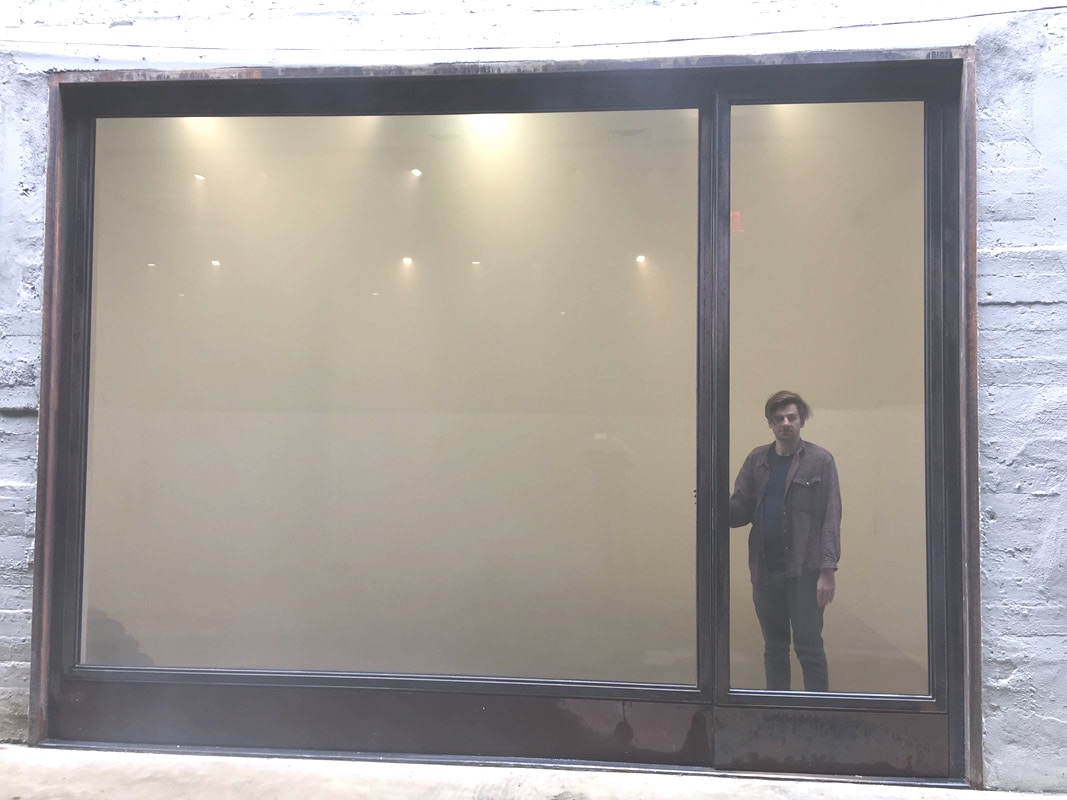
Image courtesy of New York City Players.


Published: 2nd September 2017
  • HOME
  • ABOUT
  • IN PRINT
  • ON THE ROAD
  • ON FILM
  • OFFCUTS
  • CONVERSATIONS
  • PODCASTS
  • DONATE
  • CONTACT